





Corte Suprema bloquea nuevas reglas sobre el voto por correo
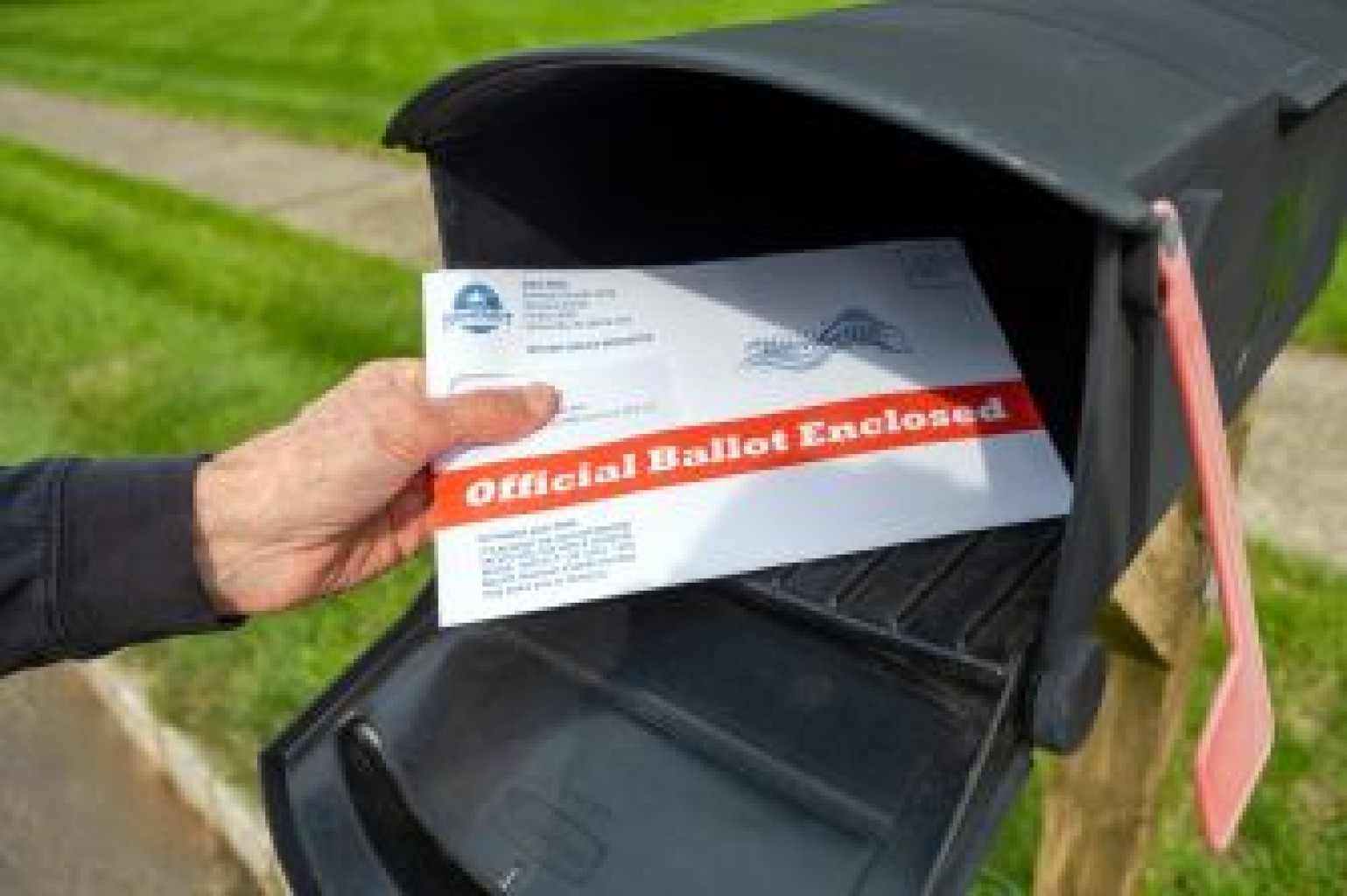
WASHINGTON .-La Corte Suprema de Estados Unidos bloqueó el lunes al gobierno del presidente Donald Trump para que no implemente nuevas normas del Servicio Postal de Estados Unidos sobre las boletas electorales enviadas por correo antes de las elecciones de mitad de mandato de noviembre.
La decisión mantiene vigentes, por ahora, los procedimientos estatales existentes para el voto por correo mientras los funcionarios electorales avanzan con los preparativos para las elecciones de 2026.
En una orden emitida el lunes en el caso United States Postal Service v. California, los magistrados rechazaron la solicitud de la administración Trump de levantar una orden judicial inferior que había impedido la entrada en vigor de las nuevas normas. La Corte determinó que el gobierno probablemente no tendría éxito en los fundamentos de su argumento y que no existían circunstancias suficientes para conceder la medida de emergencia solicitada.
La decisión representa un revés para el esfuerzo de Trump por aumentar el control federal sobre determinados aspectos del voto por correo y evita que los estados tengan que modificar sus procedimientos electorales a pocas semanas de las elecciones.
Las nuevas normas del Servicio Postal establecían requisitos adicionales para el manejo del correo relacionado con las elecciones federales.
Entre las disposiciones se encontraban nuevas especificaciones para los sobres de las boletas, incluido un logotipo de correo electoral, requisitos de compatibilidad con equipos de procesamiento postal de alta velocidad y un código de barras especializado asociado con cada votante.
Los estados también habrían tenido que presentar los diseños de sus sobres al Servicio Postal para su revisión y proporcionar determinada información de los votantes a través de un portal federal.
La administración argumentó que estas medidas mejorarían la capacidad del Servicio Postal para identificar y rastrear el correo electoral y contribuirían a detectar posibles irregularidades.
Los estados y otros opositores sostuvieron que el Servicio Postal había excedido su autoridad legal y advirtieron que introducir un sistema nuevo poco antes de las elecciones podría generar retrasos, confusión y problemas para procesar boletas legítimas.
La decisión de la Corte Suprema se centró en si las nuevas reglas podían entrar en vigor mientras continúa el litigio.
El magistrado Brett Kavanaugh coincidió con la decisión de mantener bloqueadas las normas, aunque escribió una opinión separada. Señaló que existía la posibilidad de que el Servicio Postal tuviera autoridad legal para establecer algunos requisitos, pero concluyó que la implementación durante las elecciones de 2026 planteaba problemas legales relacionados con el tiempo disponible para que los funcionarios electorales pudieran cumplirlos.
Los magistrados Samuel Alito y Clarence Thomas discreparon de la decisión.
Alito sostuvo que la administración había cumplido los requisitos necesarios para obtener una medida de emergencia y que el Servicio Postal tenía autoridad para regular determinados aspectos del correo electoral.
California y otros estados impugnaron las nuevas normas en los tribunales federales.
Los estados argumentaron que la administración de las elecciones corresponde tradicionalmente a autoridades estatales y locales y que imponer nuevos requisitos federales tan cerca de una elección podría interferir con sistemas que ya estaban preparados para procesar las boletas.
Un juez federal bloqueó inicialmente las normas mediante una orden judicial. Posteriormente, un tribunal de apelaciones mantuvo esa protección mientras la administración acudía a la Corte Suprema.
El conflicto forma parte de una disputa constitucional y política más amplia sobre hasta dónde llega la autoridad del gobierno federal para regular las elecciones y qué responsabilidades corresponden a los estados.
Para los votantes, el efecto inmediato de la decisión es que las nuevas normas del Servicio Postal no entrarán en vigor para las elecciones de 2026.
Los estados podrán continuar utilizando sus procedimientos actuales para distribuir y recibir las boletas por correo.
El asunto es especialmente relevante debido al amplio uso del voto por correo en Estados Unidos. Aproximadamente un tercio de los votantes ha utilizado esta modalidad en elecciones recientes.
Los funcionarios electorales habían advertido que modificar los requisitos de los sobres, los procedimientos relacionados con los datos de los votantes y los sistemas de procesamiento postal poco antes de una elección podría generar importantes dificultades logísticas.
La decisión de la Corte Suprema no necesariamente resuelve todas las cuestiones legales relacionadas con la regulación federal del correo electoral.
La opinión de Kavanaugh deja abierta la posibilidad de que el Servicio Postal tenga determinadas facultades para establecer requisitos sobre el correo electoral, aunque también destaca los problemas que plantea intentar implementar cambios importantes con tan poco tiempo antes de una elección.
Esto podría convertirse en un elemento importante en futuros litigios si la administración intenta introducir normas similares para elecciones posteriores.
La disputa plantea una cuestión fundamental: ¿hasta dónde puede llegar el gobierno federal al regular el voto en las elecciones federales sin interferir con la autoridad de los estados para administrar las elecciones?
Trump ha convertido la seguridad electoral y las restricciones al voto por correo en elementos importantes de su agenda política. Su administración sostiene que una mayor supervisión federal puede ayudar a proteger la integridad del proceso electoral.
Los opositores sostienen que las nuevas normas representan una intervención federal innecesaria y podrían complicar procedimientos electorales que ya funcionan en los estados.
La decisión de la Corte Suprema no pone fin al debate político sobre el voto por correo. Sí establece, sin embargo, que las nuevas normas postales no podrán aplicarse durante las elecciones de 2026.
Los funcionarios electorales podrán continuar preparando las elecciones de noviembre utilizando las reglas de voto por correo actualmente vigentes en sus respectivos estados.
Mientras tanto, la administración Trump y los estados que se oponen a las nuevas normas podrían continuar la batalla legal sobre el alcance de la autoridad federal.
La decisión del lunes marca un momento importante en el debate nacional sobre el voto por correo, la autoridad federal y el papel de los estados en la administración de las elecciones estadounidenses.
ENGLISH:
Supreme Court Blocks new Mail-Ballot Rules
WASHINGTON — The U.S. Supreme Court on Monday blocked the Trump administration from implementing new U.S. Postal Service requirements for mail-in ballots ahead of the November midterm elections, leaving existing state procedures in place as voting preparations accelerate nationwide.
In a brief order in United States Postal Service v. California, the justices denied the administration’s request to lift a lower-court injunction preventing the new rules from taking effect. The Court said the government was unlikely to succeed on the merits of its challenge and that the circumstances did not justify emergency relief.
The ruling represents a setback for President Donald Trump’s effort to impose new federal requirements on election-related mail. It also avoids a major change to mail voting procedures just weeks before the midterm elections.
The Postal Service’s final rule, issued in late August following a directive from Trump, established new requirements for federal election mail.
Among other provisions, ballot envelopes would have been required to include an election-mail logo, meet specifications allowing them to be processed by high-speed postal equipment and contain a specialized barcode unique to each voter.
States also would have been required to submit envelope designs to the Postal Service for review and upload basic voter information to a Postal Service portal. Mail that did not meet the requirements could have been returned to the state for correction.
The administration argued that the rules would improve the Postal Service’s ability to identify and track federal election mail and help detect potential election irregularities.
Opponents argued that the Postal Service lacked the authority to impose the requirements and warned that implementing a new system so close to an election could result in delays or otherwise interfere with legitimate ballots.
The Supreme Court’s Monday order was focused on whether the lower-court injunction should remain in effect while the legal dispute continues.
Justice Brett Kavanaugh agreed with the decision to keep the injunction in place but wrote separately. He said there was at least a “fair prospect” that the Postal Service had statutory authority to establish some of the requirements.
However, Kavanaugh concluded that applying the rule during the 2026 elections would violate the Administrative Procedure Act because state and local election officials did not have enough time to reasonably implement the new system before the election.
Justices Samuel Alito and Clarence Thomas dissented.
Alito argued that the administration had satisfied the legal requirements for emergency relief and that the Postal Service had authority to regulate election mail.
California and other states challenged the Postal Service rule in federal court, arguing that the federal government was attempting to interfere with responsibilities traditionally handled by state and local election officials.
A federal judge in Massachusetts issued a preliminary injunction blocking the rule. The administration then asked the Supreme Court to intervene and allow the requirements to take effect before the November elections. The Supreme Court declined.
The case is part of a broader legal and political dispute over the federal government’s authority to regulate elections and the role of states in administering them.
For voters, the immediate consequence is that the new Postal Service requirements will not take effect for the 2026 midterm elections.
States can continue using their existing procedures for distributing and returning mail ballots. That is particularly significant in states where voting by mail is widely used or where election preparations were already underway.
Voting by mail accounts for roughly one-third of ballots cast in recent U.S. elections, making the Postal Service’s handling of election mail an important component of the voting system
Election officials had warned that changing envelope requirements, voter-data procedures and postal processing standards shortly before an election could create logistical difficulties.
Although the Supreme Court’s ruling keeps the new requirements blocked for this year’s election, it does not necessarily settle every legal question surrounding federal regulation of election mail.
Justice Kavanaugh’s separate opinion suggested that some Postal Service authority to regulate election mail may exist, while emphasizing that the timing and implementation of the 2026 rule presented a separate legal problem.
That distinction could become important if the administration or a future administration attempts to introduce similar requirements with more time before an election.
The case therefore leaves an important question unresolved: how far can the federal government go in regulating the mechanics of federal election mail without intruding on the states’ role in administering elections?
Political reaction
Trump has made election security and restrictions on mail voting a major part of his political agenda. His administration argued that the new Postal Service requirements would improve the handling and oversight of federal ballots.
Opponents, including states and voting-rights organizations, viewed the rules as an unnecessary federal intrusion that could disrupt established voting procedures.
The Supreme Court’s decision does not end the broader political debate over mail voting. Instead, it ensures that voters and election officials will enter the 2026 midterm elections under the existing mail-ballot system.
Comentar
Los campos obligatorios estan marcados con *
8 Comentarios
-
Bertha Jensen
24 September 2026 20:42After speaking with Priest Alaska, I asked him to perform the LOTTO ritual for me to play and win LOTTO, he gave me a set of numbers and instructions, which I carefully followed before purchasing my ticket and playing the LOTTO. TO MY AMAZEMENT, I WON $180.5 MILLION POWERBALL JACKPOT. I am overjoyed and grateful for this turnaround in my life this credit goes to alaskaspellcaster44@gmail.com you can as well visit his website for more information regarding your solution you may seek: https://dralaskaspellcaster.mystrikingly.com If you are facing any of the following challenges, Priest Alaska can also help you: Spell to win back your ex-partner Love spell for marital reconciliation Lottery-winning spell Pregnancy spell Protection and career spells
-
Linker SEO
22 September 2026 02:36용산 가라오케·용산 노래방의 가격 구성, 프라이빗 룸, 단체 예약과 픽업 가능 여부를 확인하세요. 용산역·삼각지·이태원·한남동·이촌동에서 모임 후 방문을 계획하고 있다면 365일 24시간 전화로 상담하실 수 있습니다. 용산 노래방
-
Linker SEO
22 September 2026 02:36종로 가라오케·종로 노래방의 가격 구성, 프라이빗 룸, 단체 예약과 픽업 가능 여부를 안내합니다. 종각·종로3가·광화문·인사동·익선동에서 모임 후 방문을 계획하고 있다면 365일 24시간 전화로 상담하세요. 종로 노래방
-
Linker SEO
22 September 2026 02:36동대문 가라오케·동대문 노래방의 가격 구성과 프라이빗 룸, 단체 예약, 픽업 가능 여부를 확인하세요. 청량리·장안동·답십리·회기·신설동에서 출발하는 고객을 위한 이동 안내와 365일 24시간 전화 상담을 제공합니다. 동대문 노래방
-
Linker SEO
22 September 2026 02:36하남 가라오케·하남 노래방의 가격 구성, 프라이빗 룸, 단체 예약과 픽업 안내를 확인하세요. 미사·신장동·덕풍동·감일·위례 출발 고객을 위한 이동 상담부터 기념일 준비까지, 365일 24시간 전화로 문의하실 수 있습니다. 하남 노래방
-
Hire a Hacker for Cryptocurrency Fraud Investigation
21 September 2026 20:18I acquired my first home at the beginning of the year. To some, lottery players appear ridiculous, while we view it as a chance for an improved future. I’m known as Megan Taylor and I have played the lottery for ten years, yet I haven’t won anything substantial. In my pursuit of understanding how to win better, I was advised to consult jbee spyhack, the priest who provided me with the precise 6 numbers that helped me secure the Mega Millions jackpot of $277 million after using his spell powers and following his guidance. jbee spyhack services is top notch, and I believe your dreams aren’t finished unless you decide they are. Contact jbee spyhack the priest, and he will assist you in realizing your aspirations. Email: jbeespyhack@gmail.com
-
zoya
21 September 2026 09:16Exquisite evenings filled with passionate encounters require the company of genuinely stunning adult companions. Choosing elite Model Call Girls in Pune guarantees absolute privacy, swift service, and unmatched physical pleasure. Relax completely while your secret desires are fulfilled by true professionals.
-
Blazy
20 September 2026 02:57제주출장마사지 친친마사지에서 제주시·서귀포·중문·애월·성산의 지역별 안내와 다양한 마사지 코스를 확인하세요. 가격은 별도 문의이며, 방문 가능 여부와 예약 상담은 010-3308-6968로 문의해 주세요. 제주출장마사지























Comentar con Facebook